THE LIGHT RAIL TRANSIT SYSTEM
The development of the Light Rail Transit (LRT) System in Metro Manila was conceived as a response to the growing demand for a reliable and efficient mass transportation system amid increasing urbanization and traffic congestion. What began as a feasibility study in the 1970s eventually led to the establishment of the Light Rail Transit Authority (LRTA) and the development of two major railway lines that have become integral to the country’s public transportation network.
HISTORICAL BACKGROUND OF THE LRTA
From 1976 to 1977, a fourteen-month study funded by the World Bank was conducted by Freeman Fox and Associates, and this suggested a street-level light railway. The then newly created Ministry of Transportation and Communications (MOTC) reviewed and revised the recommendations, introducing an elevated version because of the many intersections. This raised the cost from P1.5 billion to P2 billion. Another foreign firm was commissioned by MOTC for supplementary study which was completed within three months. These studies provided the initial planning and technical foundation for the development of Metro Manila’s LRT System and paved the way for the creation of the government institution that would oversee its development.

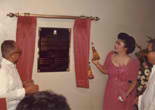
On July 12, 1980, President Ferdinand E. Marcos created the Light Rail Transit Authority (LRTA) as a government agency. The Authority was headed by then First Lady and Governor of Metro Manila Imelda Romualdez Marcos as Chairman. At the outset, LRTA’s responsibilities focused on determining policies, regulating and fixing fares, and planning extensions to the system.

The project was initially known as Metrorail, with operations undertaken by Metro, Inc., a sister company of the former tramway company Meralco. To finance the project, the Belgian government provided a P300 million soft and interest-free loan payable over 30 years. An additional P700 million loan was provided by a Belgian consortium composed of ACEC (Ateliers de Constructions Electriques de Charleroi), BN (Constructions Ferroviaires et Métalliques, formerly Brugeoise et Nivelles), TEI (Tractionnel Engineering International), and TC (Transurb Consult). The consortium supplied the railway cars and major systems, including signaling, power control, and telecommunications, and provided training and technical assistance.
The project was conceived primarily as a public utility intended to provide an efficient mass transportation service rather than as a profit center. Early financial projections recognized that the system would require government support during its initial years of operation before it could achieve greater financial sustainability.
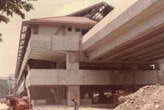
Construction of the first LRT line began in September 1981. The Construction and Development Corporation of the Philippines (CDCP) was responsible for construction, with assistance from the Swiss firm Losinger and the American company Dravo through its Philippine subsidiary. The government appointed Electrowatt Engineering Services of Zurich, Switzerland, to manage and supervise the project. Electrowatt subsequently established offices in Manila and undertook studies for future extensions of the system, reflecting the government’s long-term vision of developing a broader rail network along major transportation corridor.
DEVELOPMENT OF LRT LINE 1
The first LRT line, now known as LRT Line 1 (LRT-1), marked the beginning of LRTA’s railway operations. Construction proceeded along Taft Avenue, and free trial passenger runs were conducted in September 1984. The southern Taft Line segment was commercially opened on December 1, 1984. Construction subsequently progressed northward across the Pasig River, reaching Carriedo Station in April 1985 and eventually completing the initial line to Monumento on May 12, 1985.
The original system operated over approximately 13.95 kilometers from Baclaran in Pasay City to Monumento in Caloocan City, providing a vital north–south transportation corridor through Metro Manila.Over the succeeding decades, LRT-1 underwent significant development and expansion. The LRT-1 North Extension Project, completed in 2010, extended the line toward Balintawak and Fernando Poe Jr. Station in Quezon City. This was followed by the LRT-1 South Extension (Cavite Extension) Project, which brought the railway farther south toward Parañaque and Cavite.
Phase 1 of the Cavite Extension added approximately 6.2 kilometers of viaduct and five stations—Redemptorist–ASEANA, MIA Road, PITX, Ninoy Aquino, and Dr. Santos—and commenced commercial operations on November 16, 2024. These developments expanded LRT-1’s role beyond its original corridor and strengthened its connectivity with other major transportation systems in Metro Manila.
The line has likewise undergone significant operational and technological modernization. Following LRTA’s assumption of direct operational control in 2000, the government subsequently entered into a 32-year PPP Concession Agreement with Light Rail Manila Corporation (LRMC) in 2014, with LRMC assuming operation and maintenance of the LRT-1 System in September 2015. Modernization initiatives have since included new high-capacity trainsets, signaling system upgrades, station improvements, and other measures intended to improve safety, reliability, capacity, and passenger experience.
DEVELOPMENT OF LRT LINE 2
Building on the experience and institutional foundation established through LRT-1, LRTA subsequently developed LRT Line 2, popularly known as the Megatren, to provide a high-capacity east–west rail connection between Metro Manila and Rizal Province.
LRT Line 2 was developed at a cost of approximately P31 billion, financed mainly through concessional loans from the Japan Bank for International Cooperation (JBIC). The project was implemented through four major contract packages covering the Santolan Depot, railway substructures, viaducts and stations, and electromechanical systems, rolling stock, and track works.
The line was inaugurated in phases beginning in 2003. The initial system was completed in 2004, providing a 13.8-kilometer connection between Santolan and Recto. The East Extension Project, which opened on July 5, 2021, added the Marikina-Pasig and Antipolo stations and extended the system to approximately 17.6 kilometers across 13 stations, linking Antipolo City in Rizal to Recto in Manila.
LRT Line 2 introduced advanced railway technologies and passenger facilities, including Automatic Train Operation at Grade of Automation 2, CCTV monitoring, automated ticket vending machines, accessibility facilities, and modern trainsets. The system has continued to undergo modernization, including the introduction of contactless fare payment facilities and open-loop digital payment options to provide commuters with greater convenience.
To further expand the capacity and connectivity of the system, LRTA and the Department of Transportation are pursuing the LRT Line 2 West Extension Project (L2WEP). The project will extend the line approximately 3.02 kilometers from Recto Station to Pier 4, with three proposed stations—Tutuban, Divisoria, and Pier 4—together with right-of-way acquisition and additional trainsets. The project is intended to improve access to the Port Area and major commercial districts of Manila and strengthen connections with existing and planned railway systems.
LRTA AND THE CONTINUING DEVELOPMENT OF THE LRT SYSTEM
From its origins in a World Bank-funded feasibility study in the 1970s, the LRT System has grown into a multi-line urban railway network serving Metro Manila and neighboring areas. Over the decades, LRTA’s role has evolved alongside the railway system—from the initial development and regulation of the LRT project to the continuing modernization, expansion, and improvement of railway infrastructure and services. The development of LRT-1 and LRT-2 demonstrates the Authority’s continuing contribution to the country’s mass transportation system and its role in improving connectivity, mobility, and accessibility for the commuting public.